

How to Specify a Dog Pin Brush for Private Label Orders
Is a low quote for a dog pin brush hiding weak pin retention, an uncomfortable handle, costly packaging changes, or a model that does not fit your target coat type? For an importer, retailer, or pet brand, small choices in pin length, tip style, cushion response, handle shape, color, and packing can affect user reviews, return risk, shelf appeal, and landed cost.
A clear specification gives the supplier one dog pin brush version to quote, sample, test, and produce. It also helps your team compare offers on the same basis. This guide shows how to turn a product idea into a practical private label purchase plan without paying for features your market does not need.
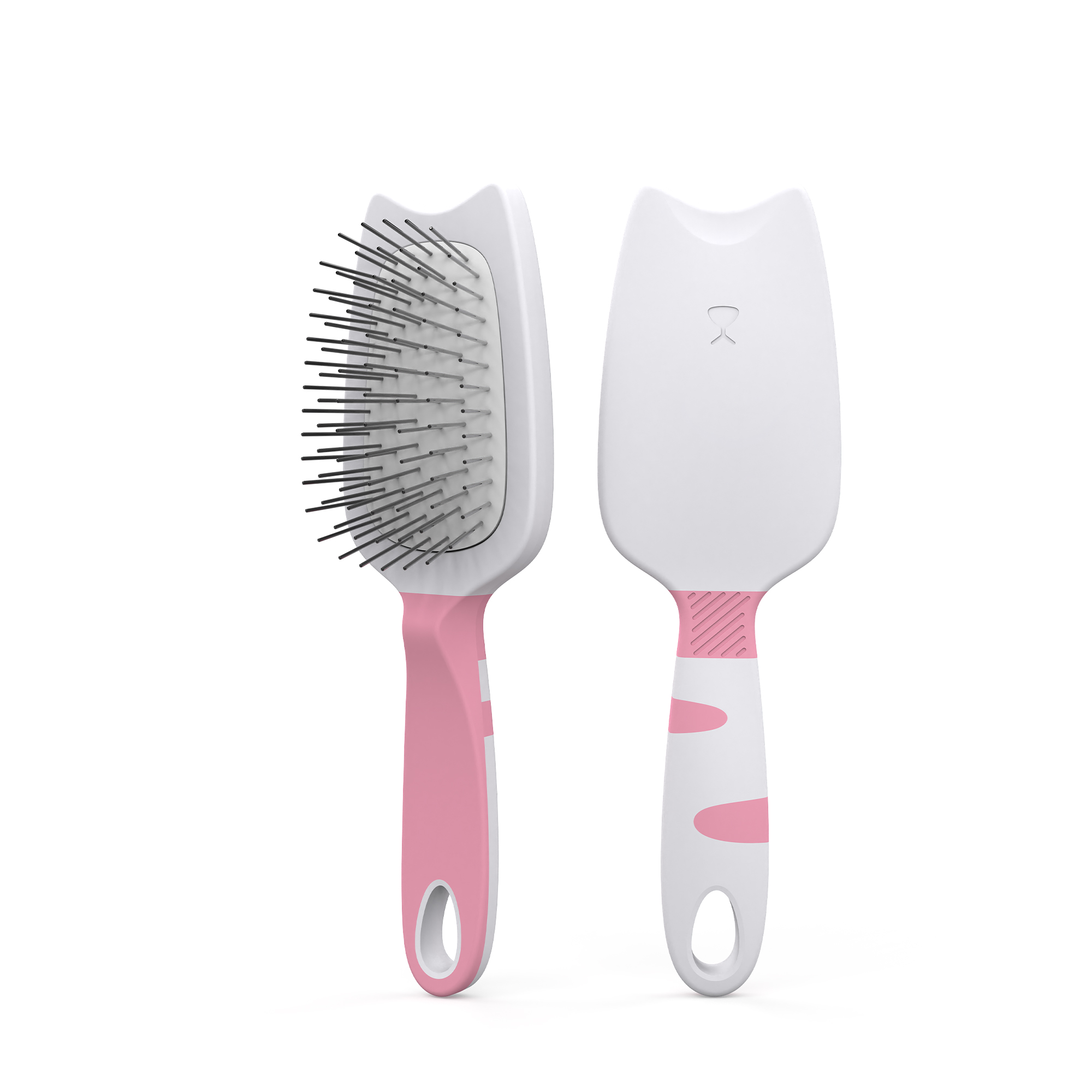
Professional Long Pin Dog Grooming Brush
Start With the Market, Not the Catalog
Define the coat type and grooming task
Begin with the coats your customers are most likely to groom. A long-pin model can reach farther into thick or long coats. A shorter or smaller dog pin brush may be easier to position for small pets or lighter daily care. Do not ask one model to cover every need, because broad claims can lead to unclear packaging and poor product fit.
Write down the main task for each dog pin brush SKU: routine brushing, light detangling, loose-hair removal, or coat smoothing. This choice should guide the pin layout, head size, cushion feel, and instructions. It also helps the supplier recommend an existing design before anyone discusses a custom mold.
Set the retail position before requesting a quote
Decide whether the dog pin brush will be an entry item, a core everyday tool, or a professional-style product. An entry item may need simple packing and a familiar shape. A higher retail position may need a refined grip, longer pins, a larger cushion, or stronger visual identity.
Build a Complete Dog Pin Brush Specification
Pin length, material, and tip style
Pin design is the center of the dog pin brush specification. Cool-Di lists stainless steel pins across its pin-brush range. Its Professional Long Pin Dog Grooming Brush uses extra-long pins of about 28 mm for thick or long coats. Use this published detail as a reference point, then confirm the exact sample specification for your order.
Cool-Di shows beadless metal-pin designs and models with rounded balls at the pin ends. A beadless dog pin brush is positioned to move through dense fur with less resistance. Rounded tips create a different touch and retail appearance. Compare physical samples on the intended coat types and inspect every tip for smooth finishing.
Ask for pin length, diameter, material, finish, spacing, and visible tolerance. Confirm how pin retention will be checked. If two quotes use different pin structures, they are not quotes for the same dog pin brush.
Cushion and brush-head response
The cushion holds the pins and affects how the dog pin brush moves under pressure. Cool-Di describes a flexible cushioned pad on its professional long-pin model. The pad is designed to follow the body shape and support gentler brushing. For procurement, the key issue is consistent response from sample to bulk order.
Press across the center and edges of the dog pin brush sample. Check whether the pad returns to shape, the pins stay aligned, and the pad sits evenly in the body. Look for gaps, lifted edges, odor, glue marks, or uneven movement. Keep an approved sample that shows the acceptable cushion feel.
Handle size, grip, and color
Review handle length, width, balance, grip area, hanging hole, edge finish, and texture. Cool-Di lists soft-handle options, and one Dog Pin Brush page lists green or custom color. Treat color as a controlled dog pin brush specification. Approve a physical color reference under normal light before production.
Standard or self-cleaning construction
Cool-Di also lists self-cleaning dog pin brush models. The feature can create a stronger product story, but it adds moving parts, packing space, instructions, and inspection needs. Compare the simpler fixed-pin product with the added cost and value of a self-cleaning design.
For a self-cleaning dog pin brush, test the release action repeatedly on several samples. Check button travel, plate movement, pin alignment, trapped hair, and reset feel. Keep standard and self-cleaning versions as separate item codes and specifications.
Control Quality Before the Bulk Order
Use one approved sample as the reference
A photo cannot be the final quality standard. Approve a physical dog pin brush sample after checking size, weight, pin layout, cushion, handle, color, logo position, packing, and instructions. Record the details in a signed specification. Give any revised sample a new version date.
Set clear inspection points
The checklist should cover appearance, dimensions, assembly, function, packing, and carton marks. For the dog pin brush, inspect pin count and alignment, loose pins, sharp edges, cushion fit, handle seams, color, printing, and surface damage. Add release and reset checks for a self-cleaning version.
Define critical, major, and minor defects for your brand. A sharp point, detached part, or failed function should not be treated like a small cosmetic mark. Ask how the supplier controls the dog pin brush during production and decide whether a pre-shipment inspection is needed.
Compare Cost, MOQ, and Delivery on the Same Basis
Understand what changes the unit cost
The cheapest dog pin brush quote may use a different head size, pin length, handle, package, or order quantity. Ask each supplier to state the exact configuration. Pin material, brush-head size, cushion construction, handle parts, custom color, logo method, packaging, volume, and inspection needs can change the price.
Avoid features that do not support the product plan. A longer pin, self-cleaning mechanism, special finish, or larger package should solve a clear buyer need. Otherwise, it can add dog pin brush cost and delay without adding useful value.
Confirm MOQ by exact model and package
Published minimums differ across the Cool-Di range. The Dog Pin Brush page lists 500 pieces, while the Professional Long Pin Dog Grooming Brush page lists 1,000 pieces. Confirm MOQ for the exact dog pin brush, color, logo, and package rather than assume one minimum applies to every model.
Ask whether the minimum changes when colors are split or printed packaging is added. A lower product MOQ may not mean a lower package MOQ. For a pilot, an existing dog pin brush structure with controlled color and packaging changes may be easier to manage while still supporting a private label identity.
Plan the timeline backward from launch
Build time for dog pin brush sampling, revisions, artwork approval, package proofing, production, inspection, booking, and transport. Ask which steps begin only after approval or deposit. Add internal decision time, because late feedback can move the shipment even when the factory schedule is stable.
Plan Private Label Details Without Losing Control
Separate product changes from branding changes
A private label dog pin brush can be differentiated through color, logo, packaging, instructions, and assortment position. Structural changes are a larger decision and may require new samples, tooling, or testing. Start with the current model closest to your brief, then list only the changes needed for your market.
Check packaging as part of the product
Cool-Di lists blister-card packing for the two published examples. If you use this format, review card size, product position, attachment points, barcode area, language, marks, and carton fit. Make sure the dog pin brush cannot move enough to damage the card during transport.
Request a packed dog pin brush sample or package proof before bulk printing. Check color, text, logo, barcode readability, and product visibility. Repacking, damaged cards, wrong labels, or oversized cartons can erase a small unit-price saving.
Evaluate the Supplier Beyond the Quote
A capable dog pin brush supplier should answer technical questions clearly, provide a controlled sample process, and explain production checks. Review category experience, OEM and ODM support, factory audit information, communication, change control, and repeat-order management. Ask for current documents that matter to your company and destination market.
Cool-Di positions KUDI as a manufacturer of pet grooming tools and retractable dog leashes with more than 20 years in the field. Its website states that it operates its own factories, offers OEM and ODM services, and has passed BSCI, SEDEX, Walmart, and Walgreens factory audits. Buyers should still confirm the exact dog pin brush specification, terms, documents, and inspection plan for each order.
Move From Sample to a Repeatable Order
The purchase order should name the approved dog pin brush sample and specification version. Include dimensions, color reference, logo file, package file, quantity, carton marks, inspection requirements, and shipment terms. Keep an approval record for every change.
Cool-Di offers standard, long-pin, and self-cleaning pin brushes, together with broader pet grooming tool manufacturing and OEM or ODM support. Send your target coat type, preferred features, market, expected quantity, packaging needs, and launch timing. Ask for the closest dog pin brush options, current specifications, samples, MOQ, and a quote based on one clear brief.
Post time: Sep-24-2026