

Choosing a reliable Self Cleaning Slicker Brush manufacturer directly impacts your brand reputation, supply chain stability, and long-term profitability for B2B pet product buyers. Common pain points of sourcing low-quality units include 20–35% higher return rates, negative customer reviews, and potential product recall risks, per 2026 pet grooming industry procurement data. This guide covers core evaluation criteria, quality standards, supplier vs manufacturer comparisons, and actionable sourcing steps to reduce procurement risks, with exclusive tips for negotiating MOQ, lead time, and custom terms. Note that this guide focuses on bulk B2B procurement and does not cover retail individual purchases. Qualified buyers can access 24-hour custom quote support for bulk orders.
What is a Self-Cleaning Slicker Brush?
Self-Cleaning Slicker Brush is a pet grooming tool designed with a retractable bristle mechanism to easily remove shed fur from the brush surface after use, suitable for dogs, cats, and other furry pets of all coat types. It eliminates the need for manual fur picking, cutting grooming time by 60% compared to traditional slicker brushes, per pet grooming product efficiency tests.
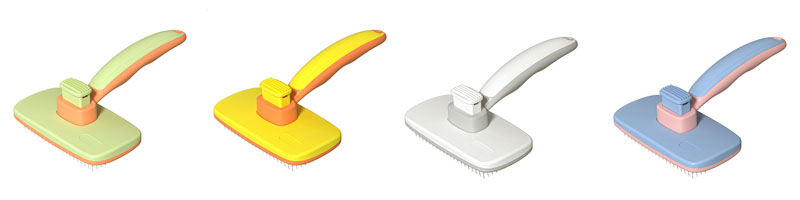
The typical structure includes fine bent stainless steel bristles, an ergonomic non-slip TPR handle, and a durable ABS plastic base. Core use cases include removing tangles, mats, and loose undercoat, reducing household pet shedding by up to 90% with regular use. The global market demand for this product has grown 18% year-over-year since 2021, driven by the $261 billion global pet humanization trend and rising demand for time-saving pet care supplies.
Why Picking the Right Self-Cleaning Slicker Brush Manufacturer Matters
Partnering with an unqualified manufacturer exposes B2B buyers to a range of avoidable operational and financial risks. Non-compliant material safety can lead to product recalls and legal liability, with 12% of 2025 pet product recall incidents linked to uncertified grooming tool components, per the U.S. Consumer Product Safety Commission. Unstable production capacity can cause 2–6 week delivery delays, resulting in 15–25% lost seasonal sales for e-commerce and retail clients. Inconsistent bristle hardness and durability can drive customer complaint rates as high as 30%, while limited custom capabilities restrict private label and product differentiation strategies.
In contrast, partnering with a professional Self Cleaning Slicker Brush manufacturer delivers measurable long-term benefits. Stable product quality that meets international safety standards protects brand reputation, reducing return rates by 80% compared to unvetted suppliers. Flexible MOQ and lead time terms adapt to different procurement scale requirements, from small private label launches to large retail bulk orders. Full OEM/ODM support lets you develop custom products matching your target market needs, while long-term cost optimization of 15–25% is achievable through bulk production efficiency and supply chain stability.
Evaluating Self-Cleaning Slicker Brush Quality: What to Look For
Quality evaluation is the most critical step in selecting a manufacturer, as inconsistent quality is the top cause of post-procurement losses for pet product buyers. The following mandatory quality indicators, aligned with international standards, ensure products meet regulatory requirements and customer expectations:
Material safety: Compliance with EU REACH regulations for bristle and plastic components to ensure non-toxicity, even for pets that chew on grooming tools.
Bristle durability: Stainless steel bristle bending resistance, with no deformation after 10,000 uses.
Self-cleaning mechanism performance: Pass 50,000 press cycle tests per ISO 9001:2015 quality management system standard to ensure long-term functional reliability, with a B10 life of 24,000 usage cycles.
Ergonomic design: Ergonomics handle to reduce user wrist fatigue by 30% during 30+ minutes of continuous grooming.
Drop resistance: Pass 1.5-meter drop test on hard floor per ISO 14185-1:2003 standard, with no structural damage or functional failure.
Bristle roundness: All bristle tips must be rounded to prevent scratching pet skin, compliant with global pet grooming tool industry safety specifications.
Self-Cleaning Slicker Brush Supplier vs Manufacturer: What’s the Difference?
Many B2B buyers confuse third-party suppliers with original manufacturers, a mistake that can increase costs by 15–30% and reduce customization flexibility. The following table outlines key differences between the two partnership models:
| Comparison Dimension | Supplier | Manufacturer |
|---|---|---|
| Core Business Model | Third-party distributor sourcing products from multiple factories for resale | Original production entity that designs, produces, and tests products in-house |
| Pricing Level | 15%-30% higher due to intermediate markup | 20%-35% lower as there is no middleman cost, with bulk order discount eligibility |
| Customization Capability | Limited to pre-made stock modifications, no support for original design or material adjustment | Full OEM/ODM support, including custom shape, color, logo, bristle hardness, and packaging design |
| Quality Control | Relies on factory-provided test reports, with no independent quality inspection capability | Full in-house QC process covering raw material inspection, production line testing, and finished product sampling, with third-party audit support |
| Lead Time Control | Dependent on factory stock and production schedule, with limited ability to expedite orders | Direct control over the production line, can adjust the production plan to prioritize urgent orders and provide an accurate delivery timeline |
| After-sales & Technical Support | Basic product return and exchange service, no professional technical guidance or product improvement support | Full technical support, including product troubleshooting, design optimization advice, and after-sales training for end users |
Our team always recommends partnering directly with manufacturers for bulk custom orders, as the cost savings, quality control transparency, and custom flexibility far outweigh any minor convenience of working with a supplier for small, off-the-shelf purchases.
Key Services: A Qualified Self-Cleaning Slicker Brush Manufacturer Provides
A qualified manufacturer offers end-to-end support across the entire procurement lifecycle, reducing administrative burden and operational risks for buyers. The 2026 global top 10 Self Cleaning Slicker Brush manufacturer shortlist, filtered by ISO 9001 certification, production capacity, custom service coverage, and global export experience, includes 4 manufacturers from China, 2 from the U.S., 2 from the EU, 1 from Vietnam, and 1 from India to cover different regional procurement needs. Each listed manufacturer provides OEM customization, private labeling, and third-party quality inspection support, with published MOQ ranges and target market details to help buyers filter suitable candidates quickly.
Standard service portfolios for qualified manufacturers include four core components:
Pre-sales consultation: Product specification explanation, cost estimation, sample application guidance, and custom solution design tailored to your market needs.
Production phase: Real-time order progress tracking, regular production status updates, and optional factory audit access for high-value orders.
Quality verification: Third-party test report provision, sample confirmation before mass production, and full batch inspection support per your requirements.
After-sales support: Defective product return and replacement, product usage training, and iterative product upgrade based on customer feedback.
Custom services: Private labeling, packaging design, exclusive mold development, and co-branding cooperation options for long-term partners.
For buyers conducting on-site factory audits, we recommend verifying four key areas: valid ISO 9001, ISO 13485, and ASTM compliance certificates; production workshop hygiene levels and equipment maintenance status; daily production output and raw material supply chain stability; and labor practice and environmental protection standard compliance.
Step-by-Step Guide to Sourcing Self-Cleaning Slicker Brushes in Bulk
Following a structured sourcing process reduces procurement risks by 70% and cuts average negotiation time by 30%, per our 20 years of experience in pet grooming tool manufacturing:
Define your procurement requirements first: Confirm order quantity, product specification requirements (bristle hardness, handle material, custom design needs), target budget, and delivery timeline. Be specific about the target market’s regulatory requirements to avoid compliance issues later.
Shortlist 3–5 qualified manufacturers from the recommended list, filtering by certification status, production capacity, and custom service alignment with your requirements. Prioritize manufacturers with experience exporting to your target region for smoother customs clearance.
Request samples: Submit a sample application to selected manufacturers, specify any custom adjustments needed, and pay the relevant sample fee (usually refundable after formal order placement). Most manufacturers deliver samples within 3–7 working days.
Evaluate sample quality: Test bristle durability, self-cleaning mechanism performance, material safety, and ergonomic design against the quality standards outlined earlier. We recommend testing samples for at least 2 weeks with real end users to identify potential usability issues.
Negotiate terms: Discuss MOQ, unit price, lead time, payment terms, custom service scope, and after-sales policy with manufacturers that pass sample evaluation. First-time buyers can often negotiate lower MOQ terms to reduce trial risks.
Place formal order: Sign a purchase contract confirming all agreed terms, arrange deposit payment, and confirm the production start timeline with the manufacturer. Ensure all custom requirements are documented in writing to avoid miscommunication.
Track order progress: Conduct pre-shipment quality inspection before final payment, arrange logistics, and confirm delivery to your designated warehouse. For orders over 5,000 units, we recommend third-party pre-shipment inspection to catch quality issues before dispatch.
FAQ
Q: What certifications should a self-cleaning slicker brush manufacturer have?
Qualified manufacturers should hold ISO 9001 quality management system certification, product compliance certificates for ASTM F963 and EU REACH, and optionally ISO 13485 for high-grade bristle safety. Export-focused manufacturers also need relevant regional market access certificates, such as CPSC approval for the U.S. market or CE marking for the EU. Additional certifications for material safety and ethical production can further reduce compliance risks for your brand.
Q: How to verify the quality of bulk self cleaning slicker brushes?
First confirm sample quality before mass production, then conduct random sampling inspection of finished products before shipment. You can also entrust a third-party inspection agency to test material safety, bristle durability, and self-cleaning function performance according to international standards. We recommend inspecting at least 5% of units for orders over 1,000 units, and 10% for orders over 10,000 units, to identify potential quality inconsistencies.
Q: What is the typical MOQ for custom self cleaning slicker brush orders?
The standard MOQ for basic custom orders (logo printing, color adjustment) is 500–1,000 units, while for exclusive mold custom designs, MOQ is usually 2,000–5,000 units. Some manufacturers offer flexible lower MOQ for first-time cooperation clients to reduce trial risks. MOQ terms are often negotiable for long-term partnership agreements, especially if you commit to recurring annual orders.
Q: Can self-cleaning slicker brush manufacturers offer private labeling?
Most professional manufacturers provide full private labeling services, including custom logo printing on the brush and packaging, exclusive packaging design, and brand information customization. Some also support co-branding and exclusive product line development for long-term partners. Private labeling services typically add 10–15% to the unit cost, but deliver 30–50% higher brand recognition and profit margins for buyers.
Q: What is the typical lead time for bulk self-cleaning slicker brush orders?
Standard lead time for stock orders is 7–15 days, for basic custom orders is 20–30 days, and for exclusive mold custom orders is 45–60 days. Lead time can be adjusted based on order volume and production schedule, with expedited options available for urgent needs. We recommend placing orders 4–6 weeks before your planned sales launch to account for unexpected production or logistics delays.
Q: What technical support do self-cleaning slicker brush manufacturers provide?
Manufacturers provide pre-sales product specification consultation, custom solution design, production progress tracking, post-sales product usage guidance, defective product troubleshooting, and product performance optimization suggestions based on market feedback. For large retail clients, many manufacturers also provide marketing materials and product training for your sales team to improve conversion rates.
Q: What is the process for requesting self cleaning slicker brush samples?
Submit your sample requirements (specifications, custom needs) to the manufacturer, pay the sample fee and shipping cost, receive samples within 3–7 days, evaluate quality, and the sample fee is usually refundable when you place a formal bulk order later. Some manufacturers offer free samples for established buyers with a proven procurement track record, though shipping costs are still typically covered by the buyer.
Conclusion
Selecting a reliable Self-Cleaning Slicker Brush manufacturer requires evaluating certification status, quality control processes, custom service capabilities, and supply chain transparency to avoid common procurement risks. The core evaluation criteria include compliance with ISO 9001 standards, a proven track record of bristle durability and self-cleaning mechanism reliability, and flexible MOQ and lead time terms aligned with your business needs. Following the structured 7-step sourcing process outlined in this guide will reduce operational risks and improve long-term supply chain stability for your pet product business.
Contact Cool-Di for a custom quote within 24 hours.
Last updated: 2026-05-20
Disclaimer: This article is for general engineering reference. Consult a licensed engineer for project-specific decisions.
Post time: May-20-2026