

Choosing a Reliable Pet Grooming Brush Manufacturer: 10 Key Factors Buyers Should Consider
Introduction
The global pet care industry continues to grow rapidly, creating new opportunities for brands, retailers, and distributors. As competition increases, buyers are paying closer attention not only to product quality but also to the capabilities of the manufacturers behind those products.
In recent years, many pet brands in North America and Europe have started to reassess their supply chains. Rising labor costs, changing consumer expectations, stricter quality requirements, and the growing demand for private label products have all made supplier selection more important than ever.
Choosing a pet grooming brush is relatively easy. Choosing the right manufacturer is far more critical.
A reliable manufacturing partner can help you maintain consistent quality, support product development, improve delivery reliability, and protect your brand reputation over the long term. On the other hand, selecting the wrong supplier may lead to production delays, inconsistent quality, communication issues, and unexpected costs.
Whether you are launching a new pet brand or expanding an existing product line, understanding how to evaluate a manufacturer is an essential part of building a successful business.
In this guide, we’ll walk through the ten key factors every buyer should consider before choosing a wholesale pet grooming brush manufacturer.
Quick Navigation
- Know Your Business Needs
- Evaluate Manufacturing Capabilities
- Assess Product Development & R&D
- Examine Quality Control Procedures
- Review Material Selection & Product Safety
- Customization & Private Label Capabilities
- Production Capacity & Lead Time
- Communication & Project Management
- Consider Industry Experience & Certifications
- Choose a Manufacturer That Can Grow With Your Business
1. Know Your Business Needs Before Choosing a Manufacturer
Before comparing suppliers, it’s important to first understand what your business actually needs. Different suppliers serve different stages of business growth, and choosing the right partner depends largely on your purchasing goals.
If You’re Just Starting Your Business
If you’re launching a new brand or testing the market, your priorities may be flexibility rather than large-scale production.
At this stage, you may want to source multiple product categories in small quantities to validate market demand before making larger investments.
In this situation, a trading company can sometimes be a practical option. Because trading companies typically work with multiple factories, they often offer a broader product selection and are more willing to accommodate lower minimum order quantities (MOQs). This can help startups reduce initial inventory risks while exploring different product categories.
However, buyers should also understand that trading companies usually have less direct control over manufacturing, production scheduling, and quality management compared with working directly with a factory.
If Your Brand Is Ready to Scale
Once your business has gained market validation and sales become more stable, your sourcing priorities often change.
At this stage, you may be looking for:
- OEM manufacturing
- ODM product development
- Private label solutions
- Exclusive product designs
- Stable product quality
- Better cost efficiency through higher production volumes
If you’re able to meet a manufacturer’s minimum order quantity, partnering directly with an experienced factory often becomes the more strategic choice.
A professional manufacturer can provide stronger technical support, greater customization capabilities, more consistent quality control, and better long-term production planning. More importantly, direct communication with the production team allows product improvements and new developments to move much more efficiently.
|
Business Stage |
Trading Company |
Manufacturer |
|
Product Testing |
⭐⭐⭐⭐⭐ |
⭐⭐ |
|
Small MOQ |
⭐⭐⭐⭐⭐ |
⭐⭐ |
|
Multiple Product Categories |
⭐⭐⭐⭐⭐ |
⭐⭐⭐ |
|
OEM / ODM |
⭐⭐ |
⭐⭐⭐⭐⭐ |
|
Private Label |
⭐⭐⭐ |
⭐⭐⭐⭐⭐ |
|
Product Development |
⭐⭐ |
⭐⭐⭐⭐⭐ |
|
Cost Control (Large Orders) |
⭐⭐⭐ |
⭐⭐⭐⭐⭐ |
|
Long-Term Partnership |
⭐⭐⭐ |
⭐⭐⭐⭐⭐ |
2. Evaluate Manufacturing Capabilities
When comparing suppliers, product catalogs often look surprisingly similar. Many manufacturers offer grooming brushes with comparable designs, materials, and specifications.
What truly differentiates one supplier from another is its manufacturing capability.
A factory’s production infrastructure directly affects product consistency, lead time, customization options, and overall supply chain reliability. For buyers planning long-term partnerships, understanding how a manufacturer operates behind the scenes is just as important as evaluating the finished product.
Here are several key areas worth paying attention to.
In-House Manufacturing vs. Outsourced Production
One of the first questions buyers should ask is whether the supplier owns its manufacturing facilities or relies heavily on outsourced production.
Manufacturers with in-house production generally have greater control over:
- Production scheduling
- Quality consistency
- Engineering improvements
- Lead times
- Cost management
This becomes especially important for OEM and private label projects, where even small design changes may require close collaboration between engineering, production, and quality control teams.
While outsourcing isn’t necessarily a disadvantage, buyers should understand how much of the production process is actually controlled by the supplier they are working with.
Production Equipment Reflects Manufacturing Stability
Modern production equipment is not simply about increasing output—it’s also a reflection of manufacturing stability and repeatability.
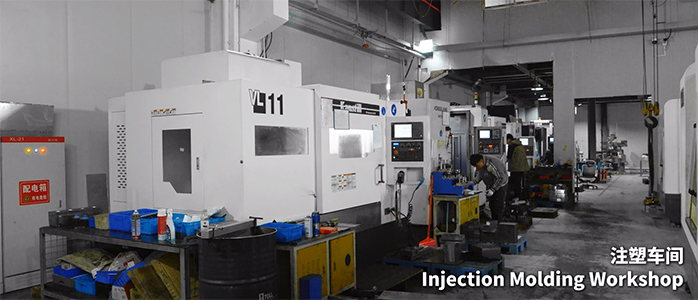
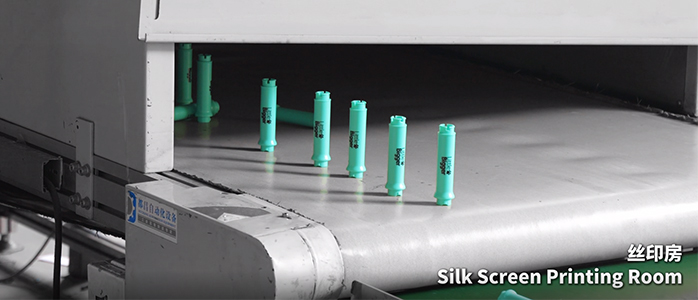
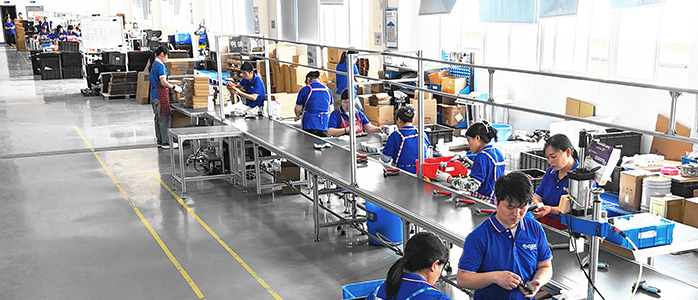
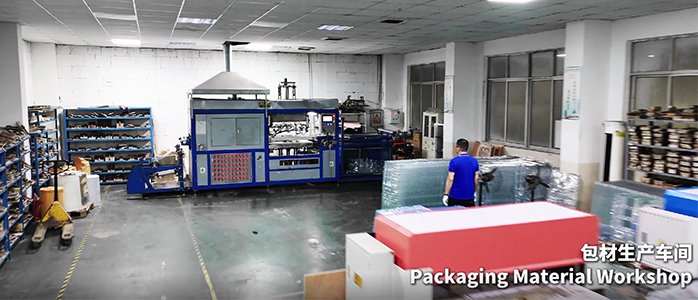
For pet grooming brushes, buyers may want to understand whether the manufacturer has dedicated facilities for:
- Plastic injection molding
- Logo printing
- Product assembly
- Packaging
- Quality inspection
Having these key processes managed within one facility often helps reduce communication delays and allows production issues to be identified and resolved more quickly.
Product Development Is More Than Manufacturing
For many growing brands, a manufacturer is expected to do more than simply produce existing products.
An experienced manufacturing partner should also be able to support product development through services such as:
- Design optimization
- Material recommendations
- Prototype development
- Mold improvement
- Packaging suggestions
- Cost reduction proposals
These capabilities become increasingly valuable as your product line expands and market competition grows.
Factory Transparency Builds Confidence
Reliable manufacturers are generally willing to show buyers how they operate.
Whether through a factory visit, virtual meeting, or production videos, transparency gives buyers a better understanding of the people, equipment, and processes behind the products.
When evaluating a supplier, don’t hesitate to ask questions such as:
- Can I see the production workshops?
- How is quality managed during production?
- How are customized projects handled?
- Can you share photos or videos of your manufacturing process?
A transparent factory is often a more trustworthy long-term partner than one that only provides product catalogs.
✔ Buyer’s Checklist
Before selecting a pet grooming brush manufacturer, consider asking the following questions:
- □ Do you own your manufacturing facility?
- □ Which production processes are completed in-house?
- □ Can you support OEM and private label projects?
- □ Do you have an internal product development team?
- □ How do you manage production quality?
- □ Can you provide factory tour photos or videos?
- □ What measures help ensure on-time delivery?
The answers to these questions often reveal far more about a manufacturer’s capabilities than a product catalog alone.
Development Process
An experienced manufacturer should have a structured development process that helps transform an idea into a finished product.
Although every factory operates differently, the process often includes:
- Understanding product requirements
- Technical evaluation and feasibility analysis
- Design optimization
- Prototype or sample development
- Product testing and evaluation
- Customer feedback and revisions
- Tooling preparation (if required)
- Mass production
A clear development workflow reduces misunderstandings, shortens project timelines, and helps avoid costly revisions during production.
Engineering Support Adds Long-Term Value
Experienced manufacturers don’t simply produce what customers request—they also provide technical recommendations based on years of manufacturing experience.
For example, engineers may suggest:
- More durable materials
- Better structural designs
- Easier assembly methods
- Improved grip and ergonomics
- Cost-effective manufacturing solutions
- Packaging improvements that reduce shipping damage
These suggestions can help improve product performance while controlling production costs, creating greater value for both brands and end users.
Innovation Is Often About Continuous Improvement
Not every successful product is a completely new invention.
In many cases, innovation comes from making small but meaningful improvements based on customer feedback and manufacturing experience.
Examples include:
- Improving brush comfort through ergonomic handle designs
- Optimizing pin spacing for different coat types
- Selecting more durable materials to extend product lifespan
- Simplifying assembly to improve manufacturing consistency
- Refining packaging for better retail presentation
Manufacturers who continuously improve their products are often better equipped to support brands in highly competitive markets.
Manufacturer Insight
Successful OEM projects are built on collaboration, not just production.
From our experience, the most successful partnerships begin with open communication. Buyers understand their markets and customers, while manufacturers contribute engineering knowledge, production experience, and practical solutions.
When both sides work together from the early development stage, it often leads to products that are easier to manufacture, more reliable in quality, and better aligned with market expectations.
Rather than simply asking, “Can you make this product?”, consider asking your supplier:
“How would you improve this product?”
The answer often reveals the true strength of a manufacturer’s R&D capabilities.
✔ Buyer’s Checklist
When evaluating a manufacturer’s product development capabilities, consider asking:
- □ Do you have an in-house R&D or engineering team?
- □ Can you assist with OEM or ODM projects?
- □ What is your product development process?
- □ Can you optimize existing product designs?
- □ Do you provide prototype or sample development?
- □ How do you validate new product designs before mass production?
- □ Can you recommend improvements based on manufacturing experience?
A manufacturer that actively contributes ideas—not just production capacity—can become a valuable long-term partner as your business grows.
4. Examine Quality Control Procedures
When sourcing pet grooming brushes, product quality is only part of the equation. Equally important is how that quality is achieved and maintained throughout the manufacturing process.
A beautifully finished sample doesn’t necessarily guarantee consistent quality during mass production. The real challenge begins when hundreds or thousands of units are being manufactured.
That’s why experienced buyers don’t simply inspect the final product—they evaluate the manufacturer’s entire quality control system.
A reliable quality management process helps minimize production defects, reduce customer complaints, and protect your brand’s reputation in the marketplace.
Quality Control Starts Before Production
Quality assurance should begin long before products reach the assembly line.
Professional manufacturers typically inspect incoming raw materials to ensure they meet predefined specifications before they enter production.
For pet grooming brushes, this may include checking:
- Plastic materials for handles and housings
- Stainless steel pins or blades
- TPR or rubber components
- Packaging materials
- Printing materials and accessories
Early material inspection helps prevent quality issues from spreading throughout the production process.
Process Control Is More Important Than Final Inspection
One common misconception is that quality control only happens after production is complete.
In reality, the most effective manufacturers monitor quality throughout every stage of production.
Typical inspection points may include:
- Injection molding quality
- Surface finishing
- Logo printing accuracy
- Assembly consistency
- Functional performance
- Packaging inspection
By identifying problems early, manufacturers can correct issues before large quantities are affected, reducing waste and avoiding costly rework.
Product Testing Verifies Performance
Visual inspection alone is not enough—especially for products that are used repeatedly by pet owners.
Depending on the product type, manufacturers may perform functional tests such as:
- Printing adhesion tests
- Alcohol resistance tests
- Tape adhesion tests
- Mechanical performance tests
- Durability evaluations
For example, logo printing should remain clear after normal cleaning and handling, while grooming tools should continue to function properly after repeated use.
These tests help verify that products meet both functional and appearance requirements before shipment.
Final Inspection Before Shipment
Before products leave the factory, a final inspection provides one last opportunity to confirm product quality.
This inspection typically includes:
- Product appearance
- Functional checks
- Packaging verification
- Quantity confirmation
- Carton labeling
- Shipping readiness
A systematic final inspection helps ensure that customers receive products that match approved samples and purchase specifications.
Quality Is Also About Traceability
Reliable manufacturers don’t simply identify problems—they document them.
Maintaining production records, inspection reports, and process documentation makes it easier to trace quality issues, implement corrective actions, and continuously improve future production.
For buyers, this level of traceability provides additional confidence, especially for long-term OEM partnerships where consistency across multiple production batches is essential.
Manufacturer Insight
Quality control isn’t something that happens at the end of production—it’s a continuous process that runs through every stage of manufacturing.
For OEM and private label projects, even small details can influence the final product. During our production process, quality checks are integrated into key stages such as raw material inspection, logo printing verification, assembly inspection, and final product evaluation. Certain printing processes are also verified through adhesion and alcohol-resistance tests to help ensure durability during everyday use.
Rather than relying solely on final inspections to identify defects, we believe that preventing problems during production is a more effective way to achieve consistent quality.
✔ Buyer’s Checklist
When evaluating a manufacturer’s quality management system, consider asking:
- □ How are incoming raw materials inspected?
- □ What quality checks are performed during production?
- □ How do you verify logo printing and product appearance?
- □ What functional tests are conducted before shipment?
- □ Is every order subject to a final inspection?
- □ Can you provide inspection reports or quality documentation?
- □ How do you handle quality issues if they occur after delivery?
The answers to these questions often provide a clearer picture of a manufacturer’s quality management capabilities than product samples alone.
5. Review Material Selection & Product Safety
For pet grooming products, quality begins long before manufacturing—it starts with selecting the right materials.
The appearance of two grooming brushes may look almost identical, but the materials used inside can make a significant difference in durability, user experience, and long-term product performance.
For brands selling in North America and Europe, material selection is also closely related to product safety, regulatory compliance, and customer satisfaction.
Choosing a manufacturer that understands both material performance and international market requirements can help reduce product risks while protecting your brand’s reputation.
Material Quality Directly Affects Product Performance
Every component of a pet grooming brush serves a specific purpose, and selecting suitable materials is essential for achieving consistent product quality.
Depending on the product design, manufacturers may use different materials for:
- Handles
- Brush heads
- Pins or blades
- Rubber cushions
- Protective coatings
- Packaging components
Rather than focusing only on cost, experienced manufacturers evaluate materials based on durability, comfort, safety, and manufacturing consistency.
A well-balanced material selection often results in products that perform better throughout their service life.
Material Consistency Matters More Than Specifications
Even when the same material is listed on a product specification sheet, its actual quality can vary depending on the supplier and production standards.
Reliable manufacturers establish stable sourcing systems and work with qualified material suppliers to maintain consistent quality across different production batches.
This consistency helps ensure that products delivered six months from now perform the same as those delivered today—an important factor for brands that value long-term customer satisfaction.
Product Safety Should Never Be Overlooked
Pet grooming tools are designed for frequent contact with both pets and owners.
As a result, product safety should always be considered during material selection.
For international markets, buyers should confirm that manufacturers understand applicable market requirements and are able to provide supporting documentation when necessary.
Depending on the destination market and product category, this may include compliance with regulations related to:
- Material safety
- Restricted substances
- Heavy metals
- Chemical testing
- Packaging requirements
While certification requirements vary by country, experienced manufacturers should be familiar with the standards expected by customers in their target markets.
Durability Protects Brand Reputation
Consumers may not know what materials are used inside a grooming brush—but they immediately notice if a handle cracks, pins loosen, or coatings wear off after only a short period of use.
Selecting durable materials is therefore not only a manufacturing decision but also a brand protection strategy.
A reliable manufacturer evaluates materials based on real-world performance, helping brands reduce warranty claims, product returns, and negative customer reviews.
Material Selection Should Match Product Positioning
Different markets have different expectations.
For example:
- Entry-level products often focus on cost efficiency.
- Premium products typically emphasize comfort, durability, and appearance.
- Professional grooming tools may require enhanced strength and a longer service life.
An experienced manufacturer should be able to recommend appropriate material combinations based on your target market, pricing strategy, and brand positioning rather than applying the same solution to every project.
Common Material Mistakes Buyers Should Avoid
- Choosing materials based only on the lowest price.
- Ignoring long-term durability and user experience.
- Not considering compliance requirements for the destination market.
- Overlooking material consistency between production batches.
Manufacturer Insight
Material selection is rarely about choosing the “most expensive” option—it’s about selecting the most appropriate one.
In OEM projects, we often discuss factors such as product positioning, expected retail price, intended market, and usage scenarios before recommending materials. A brush designed for professional groomers may require different material characteristics than one intended for everyday home use.
By understanding both manufacturing processes and market expectations, manufacturers can help brands strike the right balance between product performance, production efficiency, and overall cost.
✔ Buyer’s Checklist
Before selecting a manufacturer, consider asking:
- □ What materials are used for each product component?
- □ How do you evaluate the quality of incoming materials?
- □ Can you recommend materials based on my target market?
- □ Are your materials sourced from qualified suppliers?
- □ Can you provide relevant compliance or testing documents if required?
- □ How do you ensure material consistency across production batches?
- □ Have you worked with customers in North America or Europe?
The answers to these questions will help you better understand whether a manufacturer views material selection as a strategic part of product development—or simply as a way to reduce production costs.
6. Customization & Private Label Capabilities
As competition in the pet products industry continues to grow, more brands are looking beyond standard catalog products. They want products that reflect their own identity, meet specific market needs, and stand out from competitors.
This is where a manufacturer’s customization capabilities become increasingly important.
A reliable OEM partner should be able to support your brand throughout the customization process—not simply apply a logo to an existing product.
Understand the Difference Between OEM and ODM
Before discussing customization, it’s important to understand two common manufacturing models.
OEM (Original Equipment Manufacturing) allows buyers to customize existing products with their own branding, packaging, colors, or selected design features.
ODM (Original Design Manufacturing) goes a step further, allowing manufacturers to develop or modify products based on a customer’s specific requirements.
The right approach depends on your business goals, budget, and product strategy.
Customization Should Go Beyond Logo Printing
Many buyers initially focus on adding their logo, but true product differentiation often involves much more.
An experienced manufacturer may offer customization options such as:
- Brand logo application
- Product colors
- Handle materials and finishes
- Packaging design
- Instruction manuals
- Barcode and labeling
- Retail display solutions
- Product accessories
The more flexible the manufacturer, the easier it becomes to build a product line that aligns with your brand positioning.
Evaluate the Manufacturer’s Customization Experience
Customization is not only about production capability—it also requires project management and technical expertise.
Before selecting a supplier, consider asking:
- Have you completed OEM projects for international brands?
- Can you assist with artwork and packaging layout?
- What customization options are available without developing new tooling?
- Which design changes require new molds?
- How do you manage artwork approval before production?
Clear answers to these questions help avoid misunderstandings later in the project.
Manufacturer Insight
Successful private label projects begin with clear communication—not complicated designs.
Many buyers believe extensive customization always requires significant investment. In reality, small changes such as color combinations, packaging design, logo placement, or handle finishes can often create meaningful brand differentiation while keeping development costs under control.
An experienced manufacturer should help customers choose the most practical customization solution based on their business objectives rather than recommending unnecessary modifications.
✔ Buyer’s Checklist
- □ Do you support OEM and ODM projects?
- □ What private label options are available?
- □ Can you customize packaging and instruction manuals?
- □ Which customizations require new tooling?
- □ How do you manage artwork approval?
- □ What is the MOQ for customized products?
7. Production Capacity & Lead Time
Reliable delivery is just as important as product quality.
For distributors, retailers, and brand owners, delayed shipments can result in missed sales opportunities, inventory shortages, and increased operating costs.
When evaluating a manufacturer, buyers should look beyond production capacity alone and understand how production is planned and managed.
Production Capacity Is About Consistency, Not Just Volume
Large production capacity is valuable, but consistency is even more important.
A reliable manufacturer should be able to maintain product quality while delivering orders on schedule across multiple production runs.
Ask questions such as:
- How many production lines do you operate?
- What is your average monthly production capacity?
- How do you handle peak-season demand?
- Can you support repeat orders with consistent quality?
These questions provide a clearer picture of a manufacturer’s operational stability.
Understand Typical Lead Times
Lead time can vary depending on several factors, including:
- Order quantity
- Product complexity
- Customization requirements
- Packaging specifications
- Material availability
- Seasonal demand
Instead of focusing only on the shortest delivery time, buyers should look for manufacturers who provide realistic production schedules and communicate proactively if adjustments are needed.
Reliable planning is often more valuable than unrealistic promises.
Supply Chain Stability Matters
Consistent delivery depends on more than production equipment.
Reliable manufacturers also establish stable supply chains by working with qualified material suppliers, maintaining production planning systems, and coordinating closely across purchasing, manufacturing, quality control, and logistics.
These systems help reduce disruptions and improve delivery performance over the long term.
Manufacturer Insight
For OEM projects, on-time delivery begins long before production starts.
Accurate forecasting, material preparation, sample approval, production scheduling, and quality planning all play important roles in meeting delivery commitments.
Rather than promising the fastest lead time, experienced manufacturers focus on providing realistic schedules that customers can confidently build their business around.
✔ Buyer’s Checklist
- □ What is your standard production lead time?
- □ How do you manage peak-season orders?
- □ What is your monthly production capacity?
- □ How do you ensure on-time delivery?
- □ Can production schedules be adjusted for repeat orders?
- □ How do you communicate unexpected delays?
8. Communication & Project Management
Even the best manufacturing capabilities can be undermined by poor communication.
For international buyers, successful OEM projects rely on clear, timely, and transparent communication throughout every stage of the project.
A professional manufacturer should not only produce quality products but also make the entire sourcing process easier to manage.
Clear Communication Reduces Risk
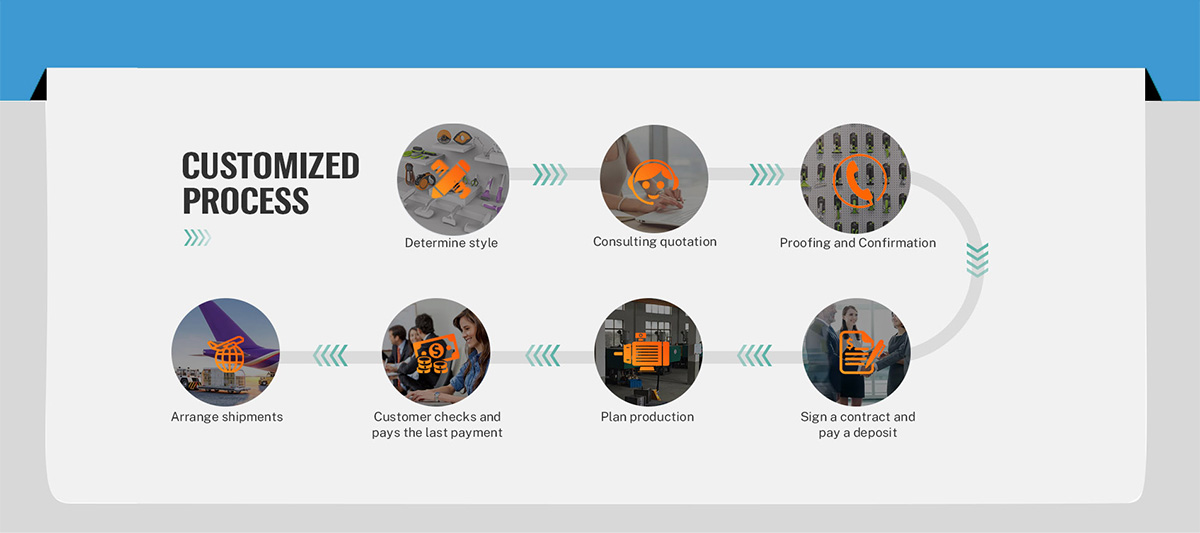
International sourcing often involves multiple stages, including:
- Product discussions
- Quotation
- Sample development
- Artwork approval
- Production
- Quality inspection
- Shipping
Without effective communication, small misunderstandings can quickly become costly production issues.
A reliable manufacturer should provide regular updates and ensure both parties remain aligned throughout the project.
Ask About Project Management
Many experienced manufacturers assign dedicated project managers or sales representatives to coordinate customer projects.
Having a single point of contact helps improve efficiency by ensuring information flows smoothly between engineering, purchasing, production, quality control, and logistics.
Before choosing a supplier, ask:
- Who will manage my project?
- How frequently will production updates be provided?
- How are design changes communicated?
- How quickly can I expect responses?
A structured communication process often reflects a well-organized manufacturing operation.
Long-Term Partnerships Depend on Trust
Business relationships are built over time.
Reliable manufacturers are transparent about production schedules, potential challenges, and realistic expectations.
Rather than simply saying “yes” to every request, trustworthy partners provide honest recommendations and work collaboratively to solve problems when they arise.
For buyers building long-term brands, this level of communication often becomes just as valuable as competitive pricing.
Manufacturer Insight
From our experience working with customers across different markets, successful OEM partnerships are built on proactive communication.
Regular updates, timely responses, and transparent discussions help reduce uncertainty throughout the sourcing process. Whether it’s confirming product specifications, reviewing packaging artwork, or coordinating production schedules, clear communication enables both sides to make informed decisions and avoid unnecessary delays.
A manufacturer should function as an extension of your team—not simply as a supplier.
✔ Buyer’s Checklist
- □ Will I have a dedicated project manager?
- □ How quickly do you typically respond to inquiries?
- □ How are production updates shared?
- □ How are engineering changes documented?
- □ Can you support communication across different time zones?
- □ How do you handle unexpected production issues?
9. Consider Industry Experience & Certifications
Choosing a manufacturer isn’t just about finding someone who can produce your products today—it’s about finding a partner who understands your industry and can continue supporting your business as it grows.
Experience often translates into better decision-making, smoother project execution, and fewer unexpected issues throughout the production process.
Industry Experience Brings Practical Knowledge
Manufacturers with years of experience in the pet products industry have likely worked with a wide range of customers, product requirements, and market expectations.
This accumulated knowledge helps them anticipate challenges before they become problems.
Experienced manufacturers are generally better prepared to support customers with:
- Product development recommendations
- Manufacturing optimization
- Material selection
- Packaging suggestions
- Market-specific requirements
- Production planning
Rather than simply following specifications, they can provide practical advice based on real manufacturing experience.
International Market Experience Matters
If your target market is North America or Europe, it’s valuable to work with manufacturers who are familiar with international business practices.
Experienced export manufacturers often have a better understanding of:
- Product compliance expectations
- Export documentation
- Packaging requirements
- International shipping procedures
- Communication with overseas customers
This experience helps reduce misunderstandings and improves the overall efficiency of international cooperation.
Certifications Demonstrate Commitment to Quality
While certifications alone do not guarantee excellent products, they do indicate that a manufacturer has established standardized management systems.
Depending on the company and target market, buyers may look for certifications related to:
- Quality management systems
- Social responsibility
- Environmental management
- Product testing
- Factory audits
Instead of asking only “Do you have certifications?”, buyers should also understand how those systems are implemented in daily operations.
A well-managed factory demonstrates its quality through consistent processes—not certificates alone.
Manufacturer Insight
Industry experience is not measured only by the number of years a factory has been operating.
More importantly, it is reflected in how effectively the manufacturer solves problems.
From product development and sampling to mass production and after-sales support, experienced manufacturers are often able to identify potential risks earlier, recommend practical solutions, and help customers avoid costly mistakes.
For OEM partnerships, experience creates confidence—not because everything always goes perfectly, but because challenges are handled professionally when they arise.
✔ Buyer’s Checklist
Before selecting a manufacturer, consider asking:
- □ How many years have you specialized in pet grooming tools?
- □ Which international markets do you currently serve?
- □ Do you have experience with OEM or private label projects?
- □ What quality management systems do you follow?
- □ Can you share examples of long-term customer partnerships?
- □ How do you continuously improve your manufacturing processes?
10. Choose a Manufacturer That Can Grow With Your Business
For many buyers, selecting a supplier is often viewed as a purchasing decision.
In reality, it is the beginning of a business partnership.
The best manufacturing relationships are built not only on competitive pricing, but also on trust, communication, and the ability to grow together over time.
Think Beyond Your First Order
When evaluating manufacturers, it’s easy to focus on the immediate project.
However, successful brands often ask a different question:
Can this manufacturer still support my business three or five years from now?
As your company grows, your manufacturing partner should be capable of supporting:
- Higher production volumes
- Expanded product lines
- More complex customization
- Faster product development
- Continuous quality improvement
Choosing a partner with long-term capabilities can reduce the need to frequently change suppliers as your business expands.
A Strong Partnership Creates Mutual Value
The most successful OEM relationships are collaborative rather than transactional.
Instead of simply receiving purchase orders, experienced manufacturers actively work with customers to improve products, optimize production efficiency, reduce costs, and solve problems together.
This type of partnership benefits both sides.
Buyers gain a reliable manufacturing partner, while manufacturers develop a deeper understanding of the customer’s brand, quality expectations, and long-term goals.
Reliability Builds Competitive Advantage
In today’s competitive market, consistency has become a significant competitive advantage.
Reliable manufacturers help brands deliver consistent quality, maintain stable supply chains, and build customer trust.
Over time, this stability contributes to stronger brand reputation and improved customer loyalty.
Choosing the right manufacturer is therefore not just an operational decision—it is an investment in your company’s future.
Manufacturer Insight
The most successful customer relationships we’ve experienced are those built over many years rather than a single purchase order.
As businesses grow, their sourcing requirements naturally evolve. Product ranges expand, customization becomes more sophisticated, and quality expectations continue to increase.
A long-term manufacturing partner should evolve alongside your business—offering continuous support, sharing manufacturing expertise, and helping transform new ideas into successful products.
When manufacturers and brands grow together, both sides create greater value than either could achieve alone.
✔ Buyer’s Checklist
Before making your final decision, ask yourself:
- □ Can this manufacturer support my future growth?
- □ Do they demonstrate a long-term commitment to quality?
- □ Are they willing to share technical knowledge and recommendations?
- □ Do they communicate openly and respond promptly?
- □ Can they adapt to future product development needs?
- □ Would I feel confident working with this company five years from now?
If the answer to most of these questions is yes, you’ve likely found more than just a supplier—you’ve found a long-term manufacturing partner.
Final Manufacturer Insight
What We Believe Makes a Reliable Manufacturing Partner
Choosing a pet grooming brush manufacturer is about much more than comparing quotations or selecting the lowest price.
A truly reliable manufacturing partner combines technical expertise, consistent quality, transparent communication, and a commitment to continuous improvement. These qualities help reduce sourcing risks, improve product consistency, and support long-term business growth.
For buyers, every successful project begins with asking the right questions—not just about products, but about the people, processes, and systems behind them.
Whether you’re launching your first private label collection or expanding an established pet care brand, taking the time to evaluate a manufacturer’s capabilities today can help build a stronger and more resilient supply chain for tomorrow.
At Kudi, we believe that manufacturing is more than production. It’s about working alongside our customers to develop reliable products, solve challenges, and create lasting partnerships built on trust and shared success.
Looking for a Reliable OEM Pet Grooming Brush Manufacturer?
Whether you’re developing a new product line, expanding your private label business, or looking for a long-term manufacturing partner, our team is ready to discuss your project and provide practical manufacturing solutions tailored to your brand.
Post time: Jun-30-2026