

Can a low-cost cat brush still protect your margin when bristles vary, branding needs a larger order, and packaging adds unexpected freight? For retailers, importers, and pet brands, a simple brush needs a clear buying brief. Small differences in the brushing surface, molded body, and pack format can change both the sample result and the final cost.
A soft bristle cat brush can be considered for a retail range, a grooming bundle, or a promotional program. Each route has different needs. This guide explains how to define the item, review samples, compare quotations, and approve a bulk order with fewer open questions.
Set the Sales Role Before Choosing Packaging
Define the Offer and Target Price
Start by deciding how the cat brush will be sold or given away. A standalone retail item may need a hanging card and clear instructions. A bundle may need compact packing that fits beside other tools. A promotional order may place greater value on logo visibility and a fixed delivery date.
For the cat brush, write down the target market, channel, quantity, and expected selling price or campaign budget. Share these with the supplier before asking for custom packaging. This gives both teams a practical basis for discussing the product and its presentation.
Keep the Product Promise Specific
A soft cat brush should have a defined role in the assortment. Ask the supplier to confirm intended coat applications and areas of use for the selected model. Do not borrow claims from a metal-pin brush or a cutting dematting tool.
A cat brush product name alone cannot establish performance. Use samples and agreed checks to decide what your package can say. Keep the description aligned with the actual construction, especially when a product will appear in several markets or languages.
Build a Model Specific Buying Brief
Confirm Materials and Sales Unit
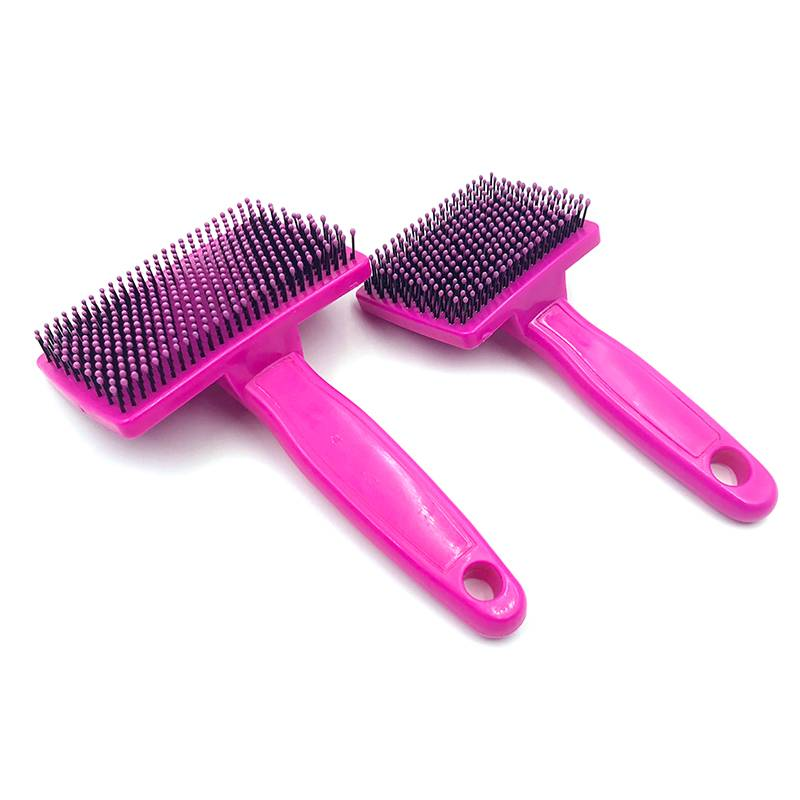
Cool-Di lists model NLCB02 as a soft nylon bristle cat brush. Its parameter section specifies nylon and PP materials, a listed weight of 30 g, and PP bag packaging. Custom colors and a custom logo are also listed.
Use this information as the starting point for an inquiry. Request the current specification and ask which material is used in the body and each part of the brushing surface. Confirm whether the stated weight is for one unpacked item and what the quoted sales unit includes.
Record Dimensions and Appearance
For the cat brush, request overall length, head width, body thickness, and exposed bristle length. For the cat brush, agree how each measurement will be taken. Add photographs or a drawing so the factory and inspector use the same reference.
Record the approved cat brush color and the appearance of the molded surface. Define acceptable shade variation with a physical reference where needed. A screen image can support discussion, but it should not be the only standard for a branded order.
Review Bristle Quality Beyond Softness
Compare the Brushing Surface
Check the cat brush sample under good lighting. Look for missing, uneven, bent, or damaged bristles. Compare the height and arrangement across the head. Inspect the ends for roughness and check whether the surface matches the approved reference.
Ask several cat brush reviewers to assess flexibility using the same method. Record their observations rather than relying on the word “soft.” A buyer may prefer one feel for a promotional item and another for a specific retail position, but the approved version must remain clear.
Agree on Retention and Recovery Checks
Bristle security deserves attention even on a small cat brush. Ask your quality partner to recommend an appropriate retention or handling test. Agree on the method, equipment, and acceptance criteria with the supplier before production.
Review the sample after repeated flexing under the agreed conditions. Look for bristles that detach, remain distorted, or change the brushing surface. Do not invent a pull-force limit or cycle count without a technical basis. A shared test is more useful than an unsupported promise of durability.
Check the Body and Handling
Inspect Molded Edges and Surface Finish
Turn the cat brush over and inspect every edge, not only the face shown in the catalog. Look for sharp molding flash, cracks, rough seams, sink marks, or uneven finishing. Confirm which visual defects your brand will accept.
For a compact cat brush, small surface defects can be highly visible because there is little other detail to distract the eye. Use reference photographs to separate minor cosmetic variation from defects that affect handling or product integrity.
Review Grip and Access
Ask several people to hold and move the cat brush in the intended manner. Review finger clearance, balance, and ease of control. Record any grip area that feels slippery or awkward during the agreed handling check.
If the item will form part of a grooming set, review it alongside the other tools. Buyers should understand why each item is included. A bundle should have a clear product role rather than several tools with overlapping descriptions.
Test Performance and Care Instructions
Use a Controlled Comparison
Compare each cat brush sample on the same suitable coat sample or test medium. Agree on preparation, stroke count, direction, and the observations to record. Review loose-hair pickup, surface contact, and ease of clearing hair from the bristles.
This is a sample comparison method, not proof of performance on every cat. Keep any marketing statements within the intended use and evidence your team has reviewed. Do not turn rounded ends or a soft feel into an absolute claim that injury is impossible.
Confirm Cleaning Before Printing Instructions
Request cat brush care instructions for the exact cat brush configuration. Follow the proposed method, then inspect the body, bristles, and branding after drying. Look for distortion, color transfer, residue, or changes in the surface.
If your team wants to claim washability, confirm the method and supporting review first. Printing a broad cleaning instruction before testing can create a mismatch between the package and the approved product.
Compare Order Minimums and Complete Cost
Separate Standard Orders From OEM Orders
Cool-Di lists a 1,000-piece MOQ for this cat brush and a 5,000-piece MOQ for OEM orders. Confirm the current minimum for your specific color, logo, and package request. Ask which changes cause an order to fall under OEM terms.
A lower cat brush unit price may require a larger stock commitment. Compare the total cash needed, expected demand, and remaining inventory after a promotion. A larger order only helps if its quantity fits the business plan.
Include Packing and Delivery Costs
A useful cat brush quotation identifies the model, materials, quantity, color, logo method, package, and trade terms. Ask suppliers to show setup charges, sample charges, and optional work clearly.
The listed PP bag is a reference configuration. If you need another format, confirm availability and request its cost. Ask for packed dimensions, units per carton, and gross weight. For a light cat brush, extra packaging can change shipping space and handling costs more than buyers expect.
Compare offers using consistent shipment terms and named locations. Include inspection, freight, and destination assumptions in your budget so the final comparison reflects the complete order.
Approve Branding and Bulk Quality Together
Review a Finished Branding Sample
Confirm logo size, position, color, and marking method for the cat brush. Ask which surfaces are suitable and request a finished sample when the method affects appearance or handling. Check readability at the actual print size.
For promotional cat brush orders, confirm the campaign name, language, and artwork version carefully. A correct product with outdated branding may have little value after delivery. Keep final artwork approval linked to the purchase order.
Create a Practical Inspection Record
Keep an approved cat brush, specification sheet, photographs, test notes, and package proof together. Define checks for product identity, dimensions, bristle condition, molded edges, color, logo, pack count, and carton labels.
Agree who will inspect the cat brush batch and how defects will be handled. Leave time for corrective work before dispatch. For repeat orders, require approval of material, component, artwork, or packing changes before production begins.
Plan the Launch With Cool Di
A cat brush delivery plan should cover sample review, branding approval, production, inspection, and transport. Share the required arrival date early, especially for promotions with a fixed launch. Ask which approvals start the production lead time.
Cool-Di’s company information identifies Suzhou Kudi Trade Co., Ltd. as a manufacturer with more than 20 years of experience in pet grooming tools and retractable dog leashes. It supports OEM and ODM work through requirement review, design visualization, sampling, production, and shipping.
For a soft bristle cat brush program, the listed NLCB02 model offers a concrete starting point. Send Cool-Di your sales channel, target quantity, color, logo, package needs, and required arrival date. Request a current specification, representative sample, and itemized quotation. Approve the product and branding together, then confirm the inspection plan and delivery schedule before placing the bulk order.
Post time: Nov-13-2026