

Does a low rake comb quote still look attractive when the teeth stick, the head feels loose, or the sample does not match the bulk order? For pet brands, importers, and distributors, a clear specification is the first step toward a useful comparison. Photos show shape and color, but they cannot confirm tooth movement, tip finish, or assembly quality.
A rotating tooth rake comb deserves a focused sample review. Buyers need to define the intended product role, check the moving parts, and turn sample approval into a written production standard. This guide explains how to prepare that process while keeping customization, cost, and delivery under control.
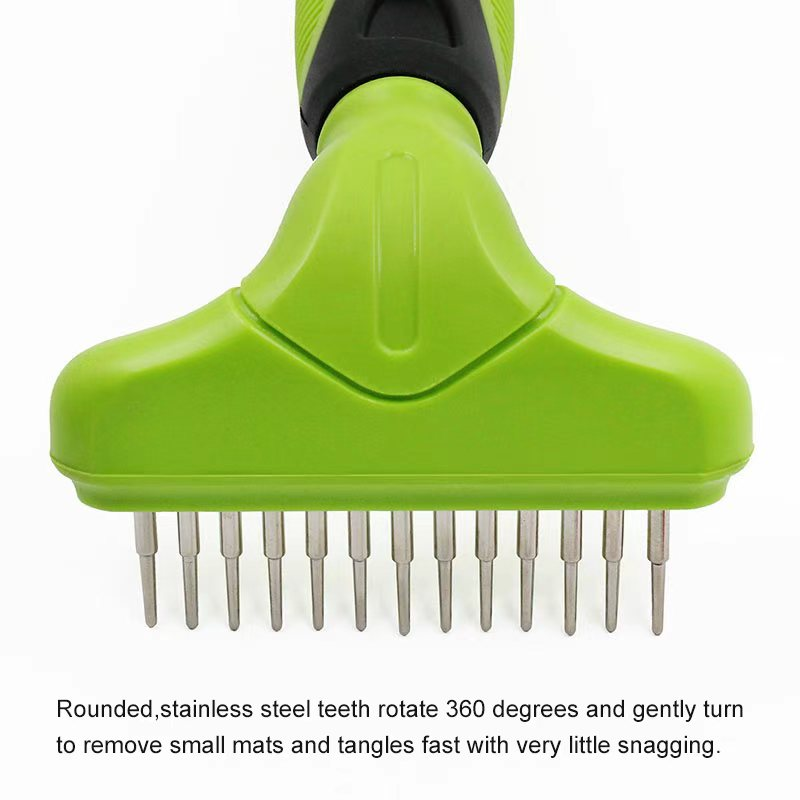
Define the Product Role and Reference Model
Separate Rotating Pins From Cutting Blades
The word rake can describe different grooming tools. Some designs have straight pins, while others use curved cutting elements. Before comparing a rake comb quotation, ask for clear front, side, and close-up photographs. Confirm whether the quoted teeth rotate and whether any component is intended to cut hair.
Keep the rake comb description consistent across the purchase order and packaging. A rotating pin model should be reviewed against its own design. Do not carry claims or test criteria across from a blade-based dematting tool simply because both products appear in a grooming catalog.
Start With a Current Specification
Cool-Di lists model 0101-018 as a dog grooming rake comb with rotating stainless steel teeth and rounded pin ends. Its parameter list gives ABS, TPR, and stainless steel materials, dimensions of 150 × 92 × 65 mm, and a weight of 105 g.
Use these details to begin the inquiry. Ask for a current drawing or specification sheet and confirm how each dimension is measured. For the rake comb, record tooth count, exposed pin length, spacing, and head width after supplier confirmation. Those details help prevent two similar-looking offers from being treated as identical products.
Inspect Tooth Movement and Retention
Check Each Pin Under the Same Conditions
Review every accessible pin on the rake comb sample. Check whether rotation feels consistent across the head. Note sticking, scraping, uneven resistance, or a pin that sits at a different angle. Repeat the review after the agreed handling test.
Rake comb pin movement and looseness are different observations. Ask the supplier to explain the intended clearance, then agree on acceptable variation with your quality partner. Avoid approving a sample solely because one or two pins rotate freely.
For a rotating tooth rake comb, keep photographs and test notes together. A short video can help show the movement that a still image cannot capture. Identify the sample version in the record so both sides can find the same reference later.
Agree on a Retention Test
A rake comb needs secure pin retention as well as movement. Ask your inspection partner to define an appropriate test method, equipment, and acceptance criteria. Confirm the method with the supplier before production.
For rake comb testing, do not invent a force limit or cycle count without a technical basis. The useful requirement is a shared, repeatable test with a recorded result. If a pin moves out of position or the head changes after testing, investigate before approving the sample.
Review Tip Finish and Head Assembly
Inspect Rounded Ends Closely
Rounded ends are a design feature that buyers should verify on the physical rake comb. Inspect the tips under suitable lighting and magnification. Look for burrs, rough edges, damaged plating where relevant, and uneven finishing.
For the rake comb, agree how the supplier will identify and remove defective pins. A general statement such as “smooth teeth” gives an inspector little guidance. Reference photographs of acceptable and unacceptable conditions make the requirement easier to apply.
Do not turn rounded-tip construction into an absolute claim that injury is impossible. Product instructions and marketing language should reflect the confirmed design and intended use.
Check the Head and Handle Joint
Hold the rake comb by its handle and review the head connection during normal handling. Look for unexpected movement, uneven gaps, sharp molding edges, or loose components. Inspect both sides rather than only the display face.
Ask whether the approved rake comb assembly method will remain the same in production. If the supplier proposes a component or construction change, request a new sample and review its effect on movement, retention, and handling.
Evaluate Grip and Grooming Performance
Use Several Reviewers for Handling
The rake comb handle should be assessed by more than one person where practical. Review palm fit, finger clearance, balance, and access to the head. A grip that feels comfortable for one reviewer may feel awkward for another.
Cool-Di’s listed model includes TPR among its materials and has a hanging hole. Confirm the material used in each handle section. Inspect the joins between surfaces and check that the hanging hole has a clean finish.
If the rake comb will be sold in a retail pack, test removal from the package too. Buyers should be able to take it out without damaging the product or leaving packaging material trapped around the pins.
Compare Samples With a Shared Method
Agree on a controlled comparison for the rake comb using a suitable coat sample or test medium. Define the preparation, number of passes, direction, and observations. Record snagging, hair pickup, ease of clearing the head, and any visible change to the test medium.
These checks support sample comparison. They do not establish performance on every breed or coat. Ask the supplier to confirm intended applications and care instructions before your team approves package claims.
Convert Approval Into a Batch Standard
Keep a Complete Reference Set
An approved rake comb should have a dated specification, physical reference, photographs, and test record. Keep color and packaging approvals with the same set. Identify who can approve changes and how the supplier should request them.
For the rake comb, separate cosmetic variation from functional defects. A minor surface mark and a loose pin require different decisions. Agree on defect categories, reporting, corrective work, and reinspection before production starts.
Plan Inspection Before Shipment
Set the rake comb inspection stage while negotiating the order. Confirm who will select samples, conduct checks, and report results. Ask your quality partner to recommend a sampling plan suited to the order and product risks.
Include product identity, dimensions, tooth movement, retention, tip finish, assembly, color, logo, and packaging. Check retail quantities and carton labels as well. A correct product packed under the wrong item code can still delay a retail launch.
Compare Customization and Total Cost
Clarify Minimums and Branding
Cool-Di lists a 500-piece minimum for this rake comb and a 1,000-piece MOQ for OEM orders. It also lists custom color, packaging, and logo options. Confirm the current minimum for your chosen configuration and each color or package version.
Ask which rake comb branding methods suit the selected surface. Approve logo size, position, and appearance before bulk production. Where a marking method changes the surface, review the finished sample rather than relying only on a digital proof.
Request Comparable Cost Details
A complete rake comb quotation should identify the exact model, materials, configuration, quantity, color, branding, packing, and trade terms. Ask for setup charges, sample charges, and optional work to be listed clearly.
For the rake comb, request packed dimensions, carton quantity, and gross weight. Protective packaging must suit the projecting teeth without adding unnecessary shipping space. Review the packed sample with your logistics team before committing to the final format.
Compare offers on the same basis. Confirm the named location and responsibilities for the agreed shipment terms, then include inspection and freight assumptions in the budget.
Set a Delivery Plan With Clear Approvals
A rake comb order schedule should include specification review, sample testing, artwork approval, production, inspection, and transport. Ask which approvals start the production clock and what happens if a sample needs revision.
For your rake comb order, share the required arrival date early. Leave time to resolve inspection findings before dispatch. For replenishment, confirm whether materials, components, artwork, or packing have changed since the approved order. Written change control helps keep repeat batches consistent.
Develop Your Grooming Range With Cool Di
Cool-Di’s company information identifies Suzhou Kudi Trade Co., Ltd. as a manufacturer with more than 20 years of experience in pet grooming tools and retractable dog leashes. It supports OEM and ODM projects through requirement review, design visualization, sampling, production, and shipping.
For a rotating tooth rake comb program, the listed model provides a concrete starting point. Match its construction to your intended assortment, approve a representative sample, and agree on measurable checks before ordering.
Send Cool-Di your target market, planned quantity, preferred configuration, branding, package format, and required arrival date. Request the current rake comb specification, a sample, and an itemized quotation. Confirm the inspection plan and production schedule after the product and artwork are approved.
Post time: Nov-06-2026