

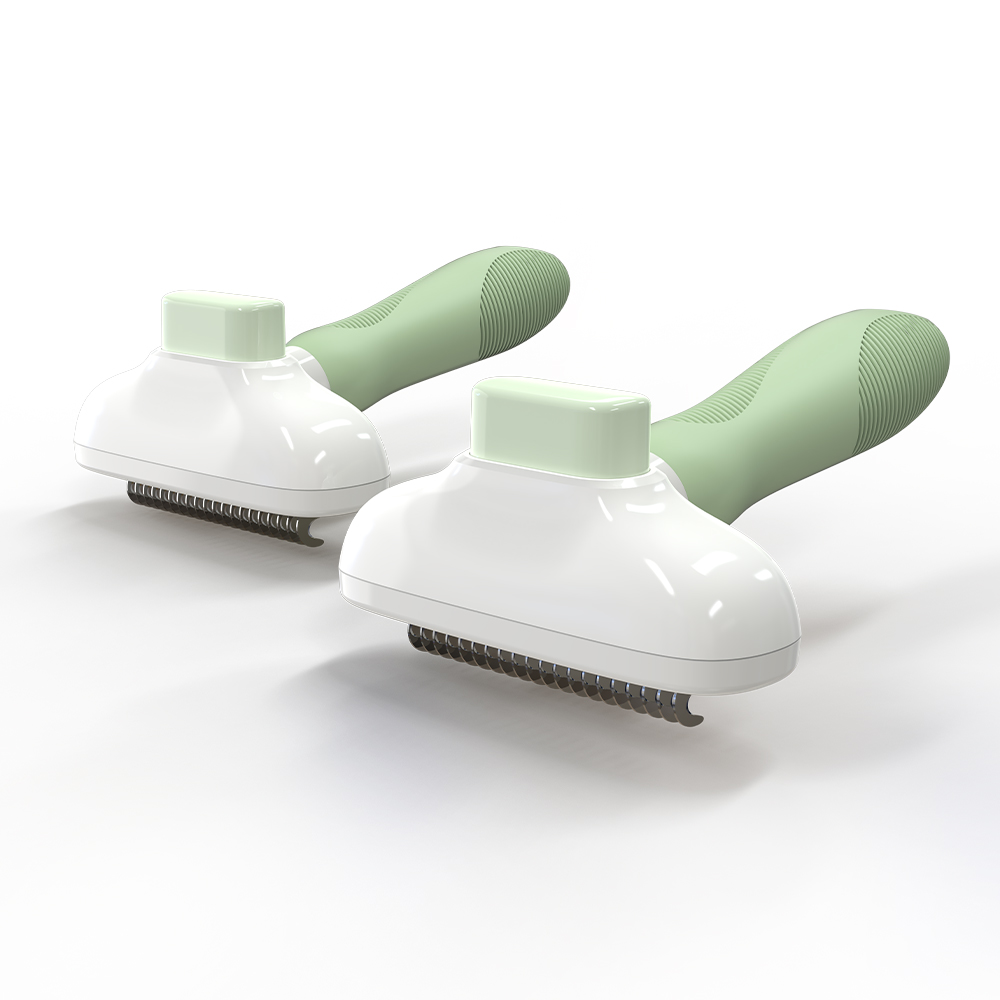
Does a push-button cleaning feature justify a higher buying price if the comb still traps hair, feels awkward to hold, or arrives with unclear instructions? For pet brands, importers, and retailers, a self cleaning dematting comb needs a clear product role and a sample that supports the sales message. Appearance alone gives buyers little evidence of how the mechanism will perform.
This guide explains how to compare blade designs, assess the cleaning function, approve packaging, and plan a private label order. A written specification connects these decisions, helping your team compare quotations and keep repeat orders consistent.
Define the Product Before Comparing Quotes
Separate Dematting From Everyday Brushing
A dematting tool serves a different purpose from a finishing comb or a pin brush. Buyers should define the intended coat types and grooming task before choosing a model. A broad label such as pet grooming brush can leave too much room for different interpretations.
For a self cleaning dematting comb, ask the supplier to explain the blade arrangement, working direction, and recommended use. Confirm which product features support your planned positioning. Avoid packaging that suggests one tool handles every coat or every kind of mat.
Decide whether the item belongs in a specialist grooming range or a broader home-care collection. That decision should guide the instructions, package size, and sample review. A professional buyer may look closely at control and repeated handling, while a retail program also needs clear first-use guidance.
Use a Specific Model as the Starting Point
Cool-Di lists a self-cleaning pet hair dematting comb under item number 0101-140. Its product page describes stainless steel blades, rounded tips, a non-slip handle, and a push-button hair removal feature. The listed dimensions are 155 × 104 × 60 mm, with a weight of 109 g.
These details provide a starting reference for a self cleaning dematting comb brief. Ask for a current specification sheet and verify the supplied sample against it. Do not assume that similar product photographs show identical materials or internal parts.
Review the Blade Assembly and Handle
Check Construction Details
Request the blade count, spacing, material, attachment method, and permitted tolerances. Ask which parts remain fixed when the cleaning button moves. If a supplier proposes a different blade layout, review it as a separate version rather than treating it as an equivalent replacement.
Inspect the self cleaning dematting comb for loose blades, uneven gaps, rough molded surfaces, and exposed burrs. Rounded tips are a design feature, but they do not justify claims that injury is impossible. Keep product claims specific and supported by the approved construction and instructions.
Your quality team should define suitable checks for blade retention and assembly strength. Agree on the method and acceptance criteria with the supplier before bulk production. A general request for strong blades does not explain what the factory must inspect.
Assess Grip and Control
Handle comfort depends on shape, texture, balance, and the position of the button. Ask several reviewers to hold the sample and operate the mechanism. Record whether fingers slip, whether the thumb reaches the button easily, and whether the grip changes during cleaning.
Evaluate the self cleaning dematting comb in its finished form, including the chosen handle material and surface treatment. A color sample or rendering cannot confirm how the grip feels. Keep the approved handle version with the product specification so later changes are visible.
Test the Self Cleaning Function
Look Beyond an Empty Button Test
Pressing a button on an empty sample only confirms that the mechanism moves. A useful review should also assess how it clears collected hair and whether material stays trapped around the blade base or moving parts.
Ask the supplier to demonstrate the self cleaning dematting comb and provide operating instructions. Agree on a controlled test using a suitable test medium, a consistent loading method, and a defined number of cycles. Record the steps so different samples can be compared fairly.
Check button travel, return action, sticking, and the effort needed to operate it. Inspect the tool again after cycling. Any movement limit, permitted play, or wear criterion should be agreed in writing rather than judged from memory.
Confirm Cleaning and Care Instructions
Review how users are expected to remove remaining hair and maintain the blade assembly. Confirm whether washing is permitted, which parts can contact water, and how the tool should be dried and stored. Stainless steel blades alone do not establish care requirements for the whole product.
Instructions for a self cleaning dematting comb should explain the intended use, cleaning steps, and relevant precautions in plain language. Ask a reviewer unfamiliar with the sample to follow the draft instructions. Revise unclear steps before package printing begins.
Compare the Complete Purchase Cost
Request the Same Scope From Every Supplier
A quotation should identify the exact model, blade configuration, handle material, color, branding method, packaging, quantity, and shipment terms. Ask the supplier to separate optional changes and one-time charges from the unit price.
When comparing a self cleaning dematting comb, check whether the price includes the same package format and quality requirements. A lower quote may reflect fewer included services or a different construction. Resolve those differences before negotiating the final price.
Also confirm sample charges, artwork costs, inspection arrangements, and quotation validity. Your purchasing team needs a clear record of what the price covers and which decisions can still change it.
Review Carton Data Early
Retail packaging can affect freight cost as well as shelf presentation. Request the packed dimensions, pieces per carton, carton weight, and packing arrangement. Use these figures to estimate logistics costs before selecting the final package.
A self cleaning dematting comb should stay secure inside its packaging, with the blade area suitably protected during handling. Check that a tight insert or blister does not hold the button under pressure. Review a packed sample for product movement, package damage, and barcode readability.
Plan Branding and Packaging Together
Approve Artwork on the Actual Product
The listed Cool-Di model offers photo colors or customized colors and identifies blister card packaging. Confirm current branding options and any alternative packaging directly with the supplier. Availability can depend on the selected model and order requirements.
For a self cleaning dematting comb, logo position should leave the grip and button easy to use. Request a physical branding sample when print appearance or durability matters. A digital proof helps confirm layout, but it does not show how ink or another marking method performs on the chosen surface.
Check the product name, instructions, language, barcode, and material statements together. Avoid unsupported claims such as pain-free grooming or guaranteed results. Approve the final artwork version before printing and retain it with the signed sample.
Keep One Reference for Repeat Orders
Record the approved product, color reference, artwork, packaging, and inspection criteria under one version number. If your range has several colors, identify the approved quantities and packaging for each variant.
A repeat self cleaning dematting comb order should refer to that same specification. Require written approval for changes to materials, blades, mechanisms, or packaging. This helps prevent a small substitution from becoming a customer complaint across a full shipment.
Confirm Quantity and Delivery Milestones
The product page lists a minimum order quantity of 1,000 pieces. Ask whether that quantity applies per color, per package design, or to the combined order. Confirm the current requirement before planning a launch around it.
For a self cleaning dematting comb order, request separate dates for sample approval, artwork approval, production completion, inspection, and dispatch. An estimated production period does not establish the arrival date at your warehouse.
Share any fixed launch deadline early. Ask what happens if the first sample needs revision or packaging approval takes longer than expected. A schedule with clear approval points is easier to manage than a single delivery promise.
Develop Your Grooming Range With Cool Di
Cool-Di presents Suzhou Kudi Trade Co., Ltd. as a manufacturer of pet grooming tools and retractable dog leashes with more than 20 years of experience. The company accepts OEM and ODM projects and describes a custom-order process covering requirements, visual design, sampling, production, and shipping.
Its listed self cleaning dematting comb gives buyers a specific model to evaluate alongside the wider grooming range. Start with the blade construction and cleaning mechanism, then confirm the grip, packaging, and landed cost against your market needs.
To discuss a self cleaning dematting comb project with Cool-Di, share your target market, intended coat types, quantity, color preferences, branding, packaging, and required arrival date. Request current specifications, samples, a written quotation, and a production schedule. Approve the complete product and package before releasing the bulk order.
Post time: Oct-15-2026